- http://www.npg.org.uk/
- http://www.vam.ac.uk/
- https://images.nationalarchives.gov.uk/assetbank-nationalarchives/action/viewHome
- http://www.nationalarchives.gov.uk/
- http://www.nottinghamshire.gov.uk/learning/history/archives/
- http://www.bbc.co.uk/archive/
- http://www.metmuseum.org/toah/hd/eudr/hd_eudr.htm
- http://www.britishmuseum.org
- http://www.theblandfordfashionmuseum.com/public/index.php
- http://www.manchestergalleries.org/our-other-venues/platt-hall-gallery-of-costume/
- http://www.museumofcostume.co.uk/collections/collection_search.aspx
- http://artrabbit.com/all/search/events?query=fashion&x=-1115&y=-13
- http://www.gettyimages.co.uk/editorialimages/archival#
- http://www.loc.gov/pictures/
- http://www.bl.uk/
- http://www.britishnewspaperarchive.co.uk/
- http://www.vam.ac.uk/content/articles/f/fashion-in-the-archive-of-art-and-design/
- http://www.britishpathe.com/workspaces/BritishPathe/The-Fashion-Archive
- http://www.vads.ac.uk/results.php?cmd=advsearch&words=london+college+of+fashion+college+archive&field=all&oper=or&words2=&field2=all&mode=boolean&submit=search&LCFCA=1

Chloe Roche; First year Design & Making Costume Student at Nottingham Trent Univerity
Showing posts with label Websites. Show all posts
Showing posts with label Websites. Show all posts
Wednesday, 16 October 2013
Websites that could be used for my history of dress folder......

Tuesday, 7 May 2013
Tudor clothing pattern
- http://costumingdiary.blogspot.co.uk/2010/12/free-historic-costume-patterns.html
- http://www.tudorlinks.com/treasury/freepatterns/index.html#Victorian
- http://caitlinsclothing.com/costuming2.html
- http://www.reddawn.net/costume/patterns.htm
- http://homepages.wmich.edu/~rowen/renbk/rendressbook.html
- http://freespace.virgin.net/f.lea/making.html
Underwear
Kirtle
Friday, 26 April 2013
Kirtle Types
http://rosaliegilbert.com/kirtles.html
The kirtle was worn over the chemise or smock and usually under the gown, surcote, sideless surcote or houppelande. Servants often had clothing handed down to them, particularly gowns which might be of value or in good repair.
Types of kirtle
It does appear that the kirtle falls into three distinct categories- the first two include those which button and those which lace. It is probably no great coincidence that there were two primary purposes- those intended to be worn over a smock with no other outer garment or a sideless surcote and those intended to be worn underneath a form-fitting outer gown. The third type falls into the laced gown category but has the distinguishing feature of short sleeves. Some had sleeves which extended over the knuckles, like the one shown in the datil at right. Most of these were cut with a wide, low neckline.
In 1375 a decree aimed at improving modesty declared:
...that a womans neckline: above all, her decollete should not be so low that her breasts can be seen. The neckline should not be lower than the armpits.
although compliance was not altogether successful and it can be deduced that it was a common enough phenomenon for lower-cut gowns to be prelavent amongst women in the towns and cities; so much enough to warrant sermonizing. In the Roman de la Rose, the 13th century's most famous French poem, a character discusses the cut of the dress:
If her neck and throat are fair and white, let her see to it that her dressmaker cuts the neck so low that half a foot of fine white flesh is visible front and back.
The short-sleeved kirtle
This is one of two types of gown. The first has short sleeves to above the elbow and is always an overgown. It is usually worn with tippets or has lappets where the sleeve has been cut away.
The second type is most usually seen with pin on sleeves- regular sleeves for the working week and perhaps more decorative or more expensive fabric for Sunday best. The sleeves were interchangeable and pinned on at the shoulder. The well-known song Greensleeves dates from the Middle Ages and is a song about the green pin-on sleeves of the author's beloved's dress. For daily chores which were messy, like laundry, the sleeves could be removed altogether and the chemise sleeves could be rolled up out of the way.
The good example of this kind of gown can be seen above in the detail of the right panel of the 1450 Van Der Weyden's Braque Family Triptych which clearly shows the lacing pulling apart at the front and the chemise showing through at the sleeve and at the top of the gown. At the back of the pin-on sleeves, the chemise can be seen between the kirtle and the sleeve.
Pins with decorative ends or glass beads were often used as a dress accessoryShown at left are pins which are fairly typical of the medieval period. The group of three pins are from 15th century Hungary.
Osbern Bokenham's Life of St Elizabeth talks of how devout Elizabeth was when she was young saying
the Solemn Holy days this girl observed with such devotion that would not permit anyone to lace up her sleeves until after mass.
The Mi-parti or Parti-colour kirtle
This is the kirtle or gown which is one colour on one side and another on the opposing side. The concept of multi-coloured clothing was always popular with musicians and entertainers who liked bright clothing and at the height of the 14th century this style also became popular with noble ladies.
The essential difference between the clothing of a noble lady and that of an entertainer is the positioning and quartering of the colours. An entertainer might have opposing colours on the sides of the gown, both front and back, side to side, sleeve to sleeve, whereas a noble lady has one colour on one side and the other colour on the other side in it's entirety. Even if one half of the gown is patterned, this still holds true. Shown at right is a detail from the 1370 tapestry, the Lovers, from Bavaria
For example, the detail above at left comes from an illumination from the 1350s The Bride Abandoned by Nicolo da Bologna. We can see that the red side of the gown has a red sleeve and the green side of the gown has a green sleeve. Another Italian gown shown in the detail at left also shows mi-parti clothing where the sleeve matches the fabric on the same side of the gown. The colours of her kirtle underneath and her overgown also match side for side.
The kirtle was worn over the chemise or smock and usually under the gown, surcote, sideless surcote or houppelande. Servants often had clothing handed down to them, particularly gowns which might be of value or in good repair.
Types of kirtle
It does appear that the kirtle falls into three distinct categories- the first two include those which button and those which lace. It is probably no great coincidence that there were two primary purposes- those intended to be worn over a smock with no other outer garment or a sideless surcote and those intended to be worn underneath a form-fitting outer gown. The third type falls into the laced gown category but has the distinguishing feature of short sleeves. Some had sleeves which extended over the knuckles, like the one shown in the datil at right. Most of these were cut with a wide, low neckline.
In 1375 a decree aimed at improving modesty declared:
...that a womans neckline: above all, her decollete should not be so low that her breasts can be seen. The neckline should not be lower than the armpits.
although compliance was not altogether successful and it can be deduced that it was a common enough phenomenon for lower-cut gowns to be prelavent amongst women in the towns and cities; so much enough to warrant sermonizing. In the Roman de la Rose, the 13th century's most famous French poem, a character discusses the cut of the dress:
If her neck and throat are fair and white, let her see to it that her dressmaker cuts the neck so low that half a foot of fine white flesh is visible front and back.
The short-sleeved kirtle
This is one of two types of gown. The first has short sleeves to above the elbow and is always an overgown. It is usually worn with tippets or has lappets where the sleeve has been cut away.
The second type is most usually seen with pin on sleeves- regular sleeves for the working week and perhaps more decorative or more expensive fabric for Sunday best. The sleeves were interchangeable and pinned on at the shoulder. The well-known song Greensleeves dates from the Middle Ages and is a song about the green pin-on sleeves of the author's beloved's dress. For daily chores which were messy, like laundry, the sleeves could be removed altogether and the chemise sleeves could be rolled up out of the way.
The good example of this kind of gown can be seen above in the detail of the right panel of the 1450 Van Der Weyden's Braque Family Triptych which clearly shows the lacing pulling apart at the front and the chemise showing through at the sleeve and at the top of the gown. At the back of the pin-on sleeves, the chemise can be seen between the kirtle and the sleeve.
Pins with decorative ends or glass beads were often used as a dress accessoryShown at left are pins which are fairly typical of the medieval period. The group of three pins are from 15th century Hungary.
Osbern Bokenham's Life of St Elizabeth talks of how devout Elizabeth was when she was young saying
the Solemn Holy days this girl observed with such devotion that would not permit anyone to lace up her sleeves until after mass.
The Mi-parti or Parti-colour kirtle
This is the kirtle or gown which is one colour on one side and another on the opposing side. The concept of multi-coloured clothing was always popular with musicians and entertainers who liked bright clothing and at the height of the 14th century this style also became popular with noble ladies.
The essential difference between the clothing of a noble lady and that of an entertainer is the positioning and quartering of the colours. An entertainer might have opposing colours on the sides of the gown, both front and back, side to side, sleeve to sleeve, whereas a noble lady has one colour on one side and the other colour on the other side in it's entirety. Even if one half of the gown is patterned, this still holds true. Shown at right is a detail from the 1370 tapestry, the Lovers, from Bavaria
For example, the detail above at left comes from an illumination from the 1350s The Bride Abandoned by Nicolo da Bologna. We can see that the red side of the gown has a red sleeve and the green side of the gown has a green sleeve. Another Italian gown shown in the detail at left also shows mi-parti clothing where the sleeve matches the fabric on the same side of the gown. The colours of her kirtle underneath and her overgown also match side for side.
Thursday, 25 April 2013
Tudor Footwear
Footwear
Tudor streets were not covered with tarmac, nor were the pavements paved both were just compacted earth. When it rained, and especially in winter, the streets would turn to thick mud. Towns and cities were very unhealthy places. There were no proper sewers (except in Bristol) and all kitchen and toilet waste was thrown into the streets where it lay in heaps at street corners. The usual household toilet was a large pail which was inevitably emptied out of an upstairs window into the street below, regardless of passers-by. Things were just as bad outside towns as in the country the ditches running between properties were used as open sewers.
It was very hard to keep your feet clean and dry under these conditions. Shoes were very rarely waterproof so rain, snow and mud, let alone the sewage lying around would have made getting about on foot very unpleasant. Several types of overshoe were devised to raise the foot further above the ground; these were known as “Pattens”, wooden shoes with blocks underneath which gave extra height to the wearer. They were designed to be slipped on over an ordinary shoe. Pattens first appeared in the 14th century and by Tudor times were worn by everybody. These were very plain, which suggests that they belonged to the poorer classes. Those belonging to a wealthy person would probably have had some decoration on the leather.
http://www.localhistories.org/shoes.html
In the Middle Ages peasants wore wooden clogs for working in muddy conditions. In the towns people wore wooden platforms called pattens under their shoes. (They had straps to hold them on). Some pattens were several inches thick.
In the Middle Ages shoe makers were called cordwainers. The word is derived from cordovan the name for leather from Cordova in Spain.
In the 16th century some people had deliberate cuts in their shoes called slashes. Sometimes they were slip on shoes but sometimes they were tied with latches. Early Tudor shoes did not have heel. However in the late 16th century women in England began to wear shoes with high heels.
Tudor streets were not covered with tarmac, nor were the pavements paved both were just compacted earth. When it rained, and especially in winter, the streets would turn to thick mud. Towns and cities were very unhealthy places. There were no proper sewers (except in Bristol) and all kitchen and toilet waste was thrown into the streets where it lay in heaps at street corners. The usual household toilet was a large pail which was inevitably emptied out of an upstairs window into the street below, regardless of passers-by. Things were just as bad outside towns as in the country the ditches running between properties were used as open sewers.
It was very hard to keep your feet clean and dry under these conditions. Shoes were very rarely waterproof so rain, snow and mud, let alone the sewage lying around would have made getting about on foot very unpleasant. Several types of overshoe were devised to raise the foot further above the ground; these were known as “Pattens”, wooden shoes with blocks underneath which gave extra height to the wearer. They were designed to be slipped on over an ordinary shoe. Pattens first appeared in the 14th century and by Tudor times were worn by everybody. These were very plain, which suggests that they belonged to the poorer classes. Those belonging to a wealthy person would probably have had some decoration on the leather.
Tudor Shoes
http://www.localhistories.org/shoes.html
In the Middle Ages peasants wore wooden clogs for working in muddy conditions. In the towns people wore wooden platforms called pattens under their shoes. (They had straps to hold them on). Some pattens were several inches thick.
In the Middle Ages shoe makers were called cordwainers. The word is derived from cordovan the name for leather from Cordova in Spain.
In the 16th century some people had deliberate cuts in their shoes called slashes. Sometimes they were slip on shoes but sometimes they were tied with latches. Early Tudor shoes did not have heel. However in the late 16th century women in England began to wear shoes with high heels.
Wednesday, 24 April 2013
Sandy Powell; The Other Boleyn Girl


The picture on the left shows an extra lady in waiting in 'The other Boleyn Girl' and the picture on the right shows the same dress worn by the character of Anne Boleyn in 'The Tudors'. Shows that even costumes from big productions can be re used if they fit in another production.
Tudor Clothing
Just a few links to films website with Tudor clothing information on them:
General Information
General Information
- http://fashion.telegraph.co.uk/galleries/TMG8416768/The-Tudors-costumes-in-pictures.html
- http://www.theanneboleynfiles.com/resources/tudor-life/tudor-clothes/
- http://www.localhistories.org/tudorclothes.html
- http://www.kimiko1.com/files/TudorMenPresentation.pdf
- http://www.tudorlinks.com/textiles.html
- http://www.sixwives.info/tudor-clothes.htm
- http://www.aboutbritain.com/articles/tudor-clothes.asp
- http://www.historyonthenet.com/Tudors/tudor_costume.htm
Monday, 22 April 2013
15th Century Clothing
The only bit of information I have found to place Snow White in a Kid of era said it was based in the mid 1400' to the mid 1500's. I think that this is the period that I am going to base it in, I don't know much about the clothing in this era, Its going to be interesting to see how it differs from others and to see what the key features of it are.
http://www.sallygreen.co.uk/sg-15.php
this shows the breakdown of the clothing that would have been worn in the 15th century
http://www.sallygreen.co.uk/sg-15.php
this shows the breakdown of the clothing that would have been worn in the 15th century
Thursday, 18 April 2013
FABRIC-ATION
http://www.ysp.co.uk/exhibitions/yinka-shonibare-mbe-fabric-ation
02.03.13 - 01.09.13
Underground Gallery, YSP Centre, Chapel & open air
Taking place in three of YSP’s indoor galleries and the open air, FABRIC–ATION features over 30 vibrant works from the period 2002 – 2013 including sculpture, film, photography, painting and collage, with many works never before seen in the UK.


Underground Gallery, YSP Centre, Chapel & open air
Taking place in three of YSP’s indoor galleries and the open air, FABRIC–ATION features over 30 vibrant works from the period 2002 – 2013 including sculpture, film, photography, painting and collage, with many works never before seen in the UK.

Tuesday, 16 April 2013
Film review websites
List of websites that have film reviews;
- http://www.guardian.co.uk/film/film+tone/reviews
- http://www.timeout.com/london/film-reviews
- http://www.empireonline.com/
- http://variety.com/
- http://www.imdb.com/
- http://www.rollingstone.com/movies
- http://www.chicagoreader.com/chicago/FilmSearch
I can use these to look at the reviews for the snow white films as an extra branch for my research
Monday, 15 April 2013
Eiko Ishioka
Eiko Ishioka was a Japanese art director, costume and graphic designer known for her work in stage, screen,advertising and print media. She was the costume designer for the film 'Mirror Mirror'.


Snow White profile
http://www.fanpop.com/clubs/disney-princess/articles/24900/title/princess-profiles-snow-white
Name; Snow White
Meaning; Name given to her by her parents because of her pale white skin
Disney film; Snow White and the Seven Dwarfs, 1st Disney classic, 1937
Voice; Adriana Caselotti
Singing Voice; Adriana Caselotti
Model; Marjorie Belcher and Margaret Champion
Based on: Many adaptions created but Brother Grimm's adaption was the one Disney’s version is most based on, ending of being kissed by the prince is borrowed from a different fairy tale - Sleeping Beauty
Based in: A fairy tale orientated land. Brother Grimm's adaption is Scottish, unsure if the Disney version is based in Scotland, it is believed to be set in Germany.
Personality: gentle, trusting, pure, loveable nature which wins her friendship and protection. She is sweet, graceful and brings out the best in people; she has lots of friends due to her lovable, caring nature. She is Sweet, Graceful and Naive.
Prince; Only ever referred to as 'The Prince
Friends: The Forest Animals, The Seven Dwarfs: Doc, Sleepy, Sneezy, Grumpy, Bashful, Dopey and Happy.Villain: The Evil Queen, Snow Whites stepmother, who grows jealous of Snow White for being fairest of the land and plots to kill her.
Links to Royalty: Born Princess, then if married to the Prince would make her princess of two lands, also considered one of the Princesses of Hearts from the Kingdom Hearts video game. Daughter of deceased rulers of the kingdom, step daughter of the ruling queen (the evil queen), first in line to the throne
Name; Snow White
Meaning; Name given to her by her parents because of her pale white skin
Disney film; Snow White and the Seven Dwarfs, 1st Disney classic, 1937
Voice; Adriana Caselotti
Singing Voice; Adriana Caselotti
Model; Marjorie Belcher and Margaret Champion
Based on: Many adaptions created but Brother Grimm's adaption was the one Disney’s version is most based on, ending of being kissed by the prince is borrowed from a different fairy tale - Sleeping Beauty
Based in: A fairy tale orientated land. Brother Grimm's adaption is Scottish, unsure if the Disney version is based in Scotland, it is believed to be set in Germany.
Personality: gentle, trusting, pure, loveable nature which wins her friendship and protection. She is sweet, graceful and brings out the best in people; she has lots of friends due to her lovable, caring nature. She is Sweet, Graceful and Naive.
Prince; Only ever referred to as 'The Prince
Friends: The Forest Animals, The Seven Dwarfs: Doc, Sleepy, Sneezy, Grumpy, Bashful, Dopey and Happy.Villain: The Evil Queen, Snow Whites stepmother, who grows jealous of Snow White for being fairest of the land and plots to kill her.
Links to Royalty: Born Princess, then if married to the Prince would make her princess of two lands, also considered one of the Princesses of Hearts from the Kingdom Hearts video game. Daughter of deceased rulers of the kingdom, step daughter of the ruling queen (the evil queen), first in line to the throne
Homes: Snow White originally lived in a Castle with her stepmother (possibly previously with one or both of her parent), she then lives with 7 dwarfs until she meets The Prince, of whom takes her away to his golden palace in the distance.
Disney era: Original Walt Disney Creation
Disney era: Original Walt Disney Creation
Hair: Tied back with a pretty ribbon
Style: Classic
Ideal pet: Squirrel
Favourite hobby: Looking after animals
Prefer to live: In a cottage
Talents: Singing, Dancing, House Keeping, Cooking, Socialising, Authority.
Nationality: It is believed that she is German
Style: Classic
Ideal pet: Squirrel
Favourite hobby: Looking after animals
Prefer to live: In a cottage
Talents: Singing, Dancing, House Keeping, Cooking, Socialising, Authority.
Nationality: It is believed that she is German
Disney Story Book Description: "..the child grew up to be a lovely young women. Her beauty and her gentle nature won the hearts of all who knew her."
Note: The first feature length animated title character EVER, Snow White never actually talks directly to the Prince throughout the whole film, generally the least favourite Disney Princess but very significant anyway. In England, the film was deemed too scary for children, and those under 16 had to be accompanied by a parent. For its 1993 reissue the film was completely restored being the first ever to be completely digitized by computer, cleaned up, and then printed back to film.
Note: The first feature length animated title character EVER, Snow White never actually talks directly to the Prince throughout the whole film, generally the least favourite Disney Princess but very significant anyway. In England, the film was deemed too scary for children, and those under 16 had to be accompanied by a parent. For its 1993 reissue the film was completely restored being the first ever to be completely digitized by computer, cleaned up, and then printed back to film.
Specific songs from original film:
"I'm Wishing"/"One Song" (Snow White/The Prince)
"With a Smile and a Song" (Snow White)
"Whistle While You Work" (Snow White)
"Some Day My Prince Will Come" (Snow White)
"I'm Wishing"/"One Song" (Snow White/The Prince)
"With a Smile and a Song" (Snow White)
"Whistle While You Work" (Snow White)
"Some Day My Prince Will Come" (Snow White)
Difference between Disney & Grimm
http://disneyvsgrimms.blogspot.co.uk/
Snow White
In the original - the Queen requests the lungs and liver (as well as the heart) of Snow White to eat for dinner that night.
In the original - Snow White is not awakened by a kiss from the prince (like the Disney version) - she is awakened when she is jostled by the horse on which her coffin is being carried by the prince
Snow White
In the original - the Queen requests the lungs and liver (as well as the heart) of Snow White to eat for dinner that night.
In the original - Snow White is not awakened by a kiss from the prince (like the Disney version) - she is awakened when she is jostled by the horse on which her coffin is being carried by the prince
http://voices.yahoo.com/differences-between-disneys-snow-white-grimms-605736.html
In Grimm's fairy tale, the Wicked Queen does not want Snow White's heart. She wants Snow White's lungs and liver. When the boar's insides are brought to her, she boils them and eats them, thinking that they are Snow White's.
In Grimm's fairy tale, it takes three attempts to kill Snow White. Each time, the Wicked Queen uses the same disguise, so Snow White must not be too smart.
In Grimm's fairy tale, there are dwarfs and they do put Snow White into a glass coffin. However, a prince does not come and kiss her. A prince comes and he thinks that the body is beautiful, so he wants it. It is only when servants drop the coffin that the piece of poison apple dislodges from Snow White's throat and she is brought back to life.
Also, in Grimm's fairy tale, the Wicked Queen does not get chased off of a cliff. Instead, she makes it back to her castle. She is then invited to Snow White's wedding. When she gets there, she is forced to wear a pair of red-hot iron shoes. She is forced to dance in these shoes until she drops dead.
In Grimm's fairy tale, the Wicked Queen does not want Snow White's heart. She wants Snow White's lungs and liver. When the boar's insides are brought to her, she boils them and eats them, thinking that they are Snow White's.
In Grimm's fairy tale, it takes three attempts to kill Snow White. Each time, the Wicked Queen uses the same disguise, so Snow White must not be too smart.
In Grimm's fairy tale, there are dwarfs and they do put Snow White into a glass coffin. However, a prince does not come and kiss her. A prince comes and he thinks that the body is beautiful, so he wants it. It is only when servants drop the coffin that the piece of poison apple dislodges from Snow White's throat and she is brought back to life.
Also, in Grimm's fairy tale, the Wicked Queen does not get chased off of a cliff. Instead, she makes it back to her castle. She is then invited to Snow White's wedding. When she gets there, she is forced to wear a pair of red-hot iron shoes. She is forced to dance in these shoes until she drops dead.
Tuesday, 9 April 2013
The Brother's Grimm, 2005
Will and Jake Grimm are traveling con-artists who encounter a genuine fairy-tale curse which requires true courage instead of their usual bogus exorcisms.
http://www.rottentomatoes.com/m/brothers_grimm/
Two men who have made a career out of spinning remarkable stories find themselves bringing them to life in this inventive fantasy inspired by the creators of some of the world's best-loved fairy tales. Will Grimm (Matt Damon) and his brother Jake Grimm (Heath Ledger) earn their living by traveling from village to village and vanquishing strange supernatural beasts that have been menacing the populace. Or at least that's what their clients think has been happening; as it happens, Will and Jake are confidence men who cleverly stage the ghostly attacks and then take payment for making the creatures they fabricated go away. One day, the brothers arrive in a town and offer to help its people drive away evil spirits, unaware that the community is bordered by a genuine enchanted forest, and that young girls in the village have been disappearing at a frightful rate. The Grimm Brothers must now learn how to deal with real magic, with the help of the lovely but fearless Angelika.
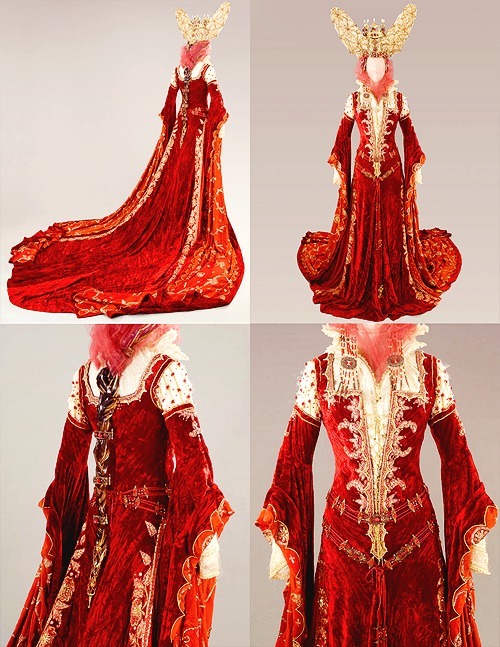 |
| Evil Queens costume |
 |
| Will and Jacob Grimm costumes |
Gabriella Pescucci & Carlo Poggioli
Thee were the two people that were the costume designers for 'The Brothers Grimm', 2005 film.
Gabriella Pescucci
http://www.imdb.com/name/nm0675951/bio

Gabriella Pescucci was born in Rosignano Solvay in Tuscany in 1941 and began her film career as an assistant to Piero Tosi in the late 1960s. By the 1970s she was working as a costume designer in her own right with several films for Giovanni Patroni Griffi and also for Fellini, making her international debut in 1984 with 'Once Upon a Time in America', for which she took the first of her two British Film Academy Awards, the second being for 'The Adventures of Baron Munchausen'. In addition to her film work she has designed for the opera, notably 'La Traviata' at the Archimboldi Theatre, Milan and 'A Masked Ball' at the Kennedy Centre in Washington, D.C.
Carlo Poggioli
http://www.imdb.com/name/nm0688231/
http://www.mastercostume.it/Carlo_Poggioli_master_costume.html

Costume and fashion designer, after studying (Art Institute and the Academy of Fine Arts in Naples), has worked for national and international productions and personalities. These include: Gabriella Pescucci, Piero Tosi, Maurizio Millenotti, JJ Annaud, Luca Ronconi, Marco Gandini, Terry Gilliam, Vera Belmon, Uli Edel, Federico Fellini, Martin Scorsese, Anthony Minghella, Franco Zeffirelli, Steven Sommers, Andrzej Bartkowiak, John Irvin Giulio Base, Terry Gilliam.
Gabriella Pescucci
http://www.imdb.com/name/nm0675951/bio
Gabriella Pescucci was born in Rosignano Solvay in Tuscany in 1941 and began her film career as an assistant to Piero Tosi in the late 1960s. By the 1970s she was working as a costume designer in her own right with several films for Giovanni Patroni Griffi and also for Fellini, making her international debut in 1984 with 'Once Upon a Time in America', for which she took the first of her two British Film Academy Awards, the second being for 'The Adventures of Baron Munchausen'. In addition to her film work she has designed for the opera, notably 'La Traviata' at the Archimboldi Theatre, Milan and 'A Masked Ball' at the Kennedy Centre in Washington, D.C.
Carlo Poggioli
http://www.imdb.com/name/nm0688231/
http://www.mastercostume.it/Carlo_Poggioli_master_costume.html
Costume and fashion designer, after studying (Art Institute and the Academy of Fine Arts in Naples), has worked for national and international productions and personalities. These include: Gabriella Pescucci, Piero Tosi, Maurizio Millenotti, JJ Annaud, Luca Ronconi, Marco Gandini, Terry Gilliam, Vera Belmon, Uli Edel, Federico Fellini, Martin Scorsese, Anthony Minghella, Franco Zeffirelli, Steven Sommers, Andrzej Bartkowiak, John Irvin Giulio Base, Terry Gilliam.
Monday, 8 April 2013
Gruesome Grimm
When looking at the Grimm Brothers stories I want to look at the original as well as the adaptations done by company's like Disney. Some of the original versions of the stories are really gruesome and nothing like how they are told now.
Lez Brotherston's Costume Design ‘Bible’ for The Brontës
http://www.vam.ac.uk/content/articles/l/lez-brotherstons-costume-design-bible-for-the-brontes/
Looking at this helped with the way that I produce my designs for this project. The link shows that different costume designs for the Brontes. It gave me the idea of making my designs bigger and put them alongside each other so that I can easily compare them.
Looking at this helped with the way that I produce my designs for this project. The link shows that different costume designs for the Brontes. It gave me the idea of making my designs bigger and put them alongside each other so that I can easily compare them.
 |
| One of the double pages from Lez Brotherston's design book |
Friday, 22 March 2013
Charles Dana Gibson
Charles Dana Gibson was an illustrator. He became famous for his drawings of American high society. The young women in his drawings became known as Gibson Girls. These are some photos showing the iconic 'Gibson girls'.

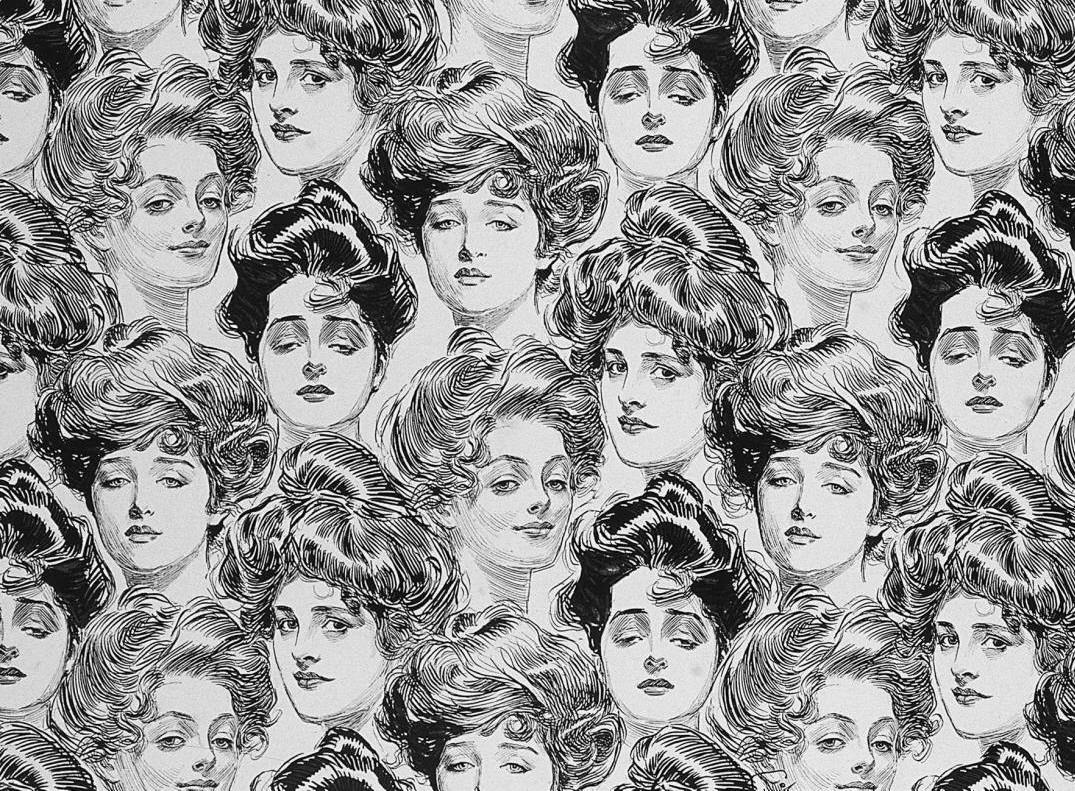
I am going to use this as the influence for the hairstyle in my evening wear design.
History of hair
I needed to look at hairstyles for the Victorian era so that I got the hairstyles on the designs right. I found the history of hair website which I can use both for this project and future projects.
http://thehistoryofthehairsworld.com/
Victorian era; 19th Century
http://thehistoryofthehairsworld.com/hair_19th_century.html


http://thehistoryofthehairsworld.com/
Victorian era; 19th Century
http://thehistoryofthehairsworld.com/hair_19th_century.html
Tuesday, 19 March 2013
Some Garment Construction & Pattern Cutting Links
Just a few websites that show and explain the basic stages of garment construction, pattern cutting etc.
- http://chestofbooks.com/crafts/needlework/Garments-For-Girls/Chapter-II-Garment-Construction.html
- http://books.google.co.uk/books?id=avoUQR-ULO4C&lpg=PA48&ots=1sAyH0fNHO&dq=technical%20side%20of%20garment%20construction&pg=PA48#v=onepage&q&f=false
- https://docs.google.com/viewer?a=v&q=cache:1aEF1HxQN48J:cdn.shopify.com/s/files/1/0131/0182/files/BeginningGarmentMaking.pdf+&hl=en&gl=uk&pid=bl&srcid=ADGEESjstOxKhqqTpvaKV6bg3QuXaLNjJ1IISTC3ekJvYre8H72DXvSebculA2nKZ70AYSd9-ir3HKkhJeEnERJ55-CI1guCkddzadI3py3OyBi4eC6m-QkpT6hfSwegP6tcXHP_sy82&sig=AHIEtbRikdFX5gKDJXhtYzu14mNksmTXpA
- http://cool-chick.hubpages.com/hub/How-to-make-your-own-sewing-pattern
- http://books.google.co.uk/books?id=CwBpQfZvQFUC&pg=PA22&source=gbs_toc_r&cad=4#v=onepage&q&f=false
Sunday, 17 March 2013
Some corset Info
Victorian corset information
http://www.vam.ac.uk/content/articles/c/corsets-and-bustles-1880-1890-from-over-structured-opulence-to-the-healthy-corset/
By the 1880s the corset had become a very elegant and desirable object in a woman's wardrobe and much attention paid to its design and execution. The rapid growth of the corset manufacturing industries meant that there was greater variety in materials, colour, size and fit. The most expensive might be made of satin, brightly coloured corsets also became more acceptable.
http://pinterest.com/elvenwonder/corset-making-techniques/
Corset boning information
http://corsetmaking.com/category/boning-information.html
There are many types of boning available and sometimes choosing the most appropriate type can be a confusing task. The comparison chart below is to help you decide what corset boning will be best for your particular project.
How to make
http://foundationsrevealed.com/200-about/slideshow/359-how-to-make-a-corset
http://www.vam.ac.uk/content/articles/c/corsets-and-bustles-1880-1890-from-over-structured-opulence-to-the-healthy-corset/
By the 1880s the corset had become a very elegant and desirable object in a woman's wardrobe and much attention paid to its design and execution. The rapid growth of the corset manufacturing industries meant that there was greater variety in materials, colour, size and fit. The most expensive might be made of satin, brightly coloured corsets also became more acceptable.
http://pinterest.com/elvenwonder/corset-making-techniques/
Corset boning information
http://corsetmaking.com/category/boning-information.html
There are many types of boning available and sometimes choosing the most appropriate type can be a confusing task. The comparison chart below is to help you decide what corset boning will be best for your particular project.
How to make
http://foundationsrevealed.com/200-about/slideshow/359-how-to-make-a-corset
Subscribe to:
Posts (Atom)