Showing posts with label Contextual. Show all posts

Saturday, 1 June 2013

Costume for theater


Outline

I.      The costume designer is concerned primarily with the visual appearance of the characters
A.    The scene designer and the costume designer’s work interacts and needs to be coordinated carefully

II.    The Functions of Costume Design
A.    Establish time and place
1.     Based on clothing worn at the time of the action
2.     Indicate a particular country or region
3.     Indicate a particular place
4.     Indicate a time of day or occasion
B.    Establish social and economic status
1.     Distinguish between classes and indicate level of affluence
C.    Identify occupation or lifestyle
D.    Indicate gender and reflect age
1.     Adhere to stereotypes of what is appropriate
E.    Reflect a character’s atypicality
1.     Dress that departs from the norm
F.    Costumes do not always adhere to realistic standards
1.     They may embody a metaphor, symbol or allegorical concept
a.     Symbol or allegory – capture the essence of each character as indicated by its name
b.    Metaphor – embody the perception of the world in subtle and varied ways
G.    Reflect mood and atmosphere
H.    Establish a particular style
I.      Reflect formalized conventions
J.     Reflect a level of exaggeration
K.    Enhance or impede movement
1.     Costumes may help to determine amount, type and the overall pattern of movement and stage business
L.     Establish or clarify character relationships by:
1.     Contrasting members of one faction and with the members of a rival faction
2.     Identifying sympathetic and antagonistic relationships
3.     Indicating an alteration in relationships through changes
M.   Establish the relative importance of characters
1.     Generally accomplished through contrast
N.    Underline the development of the dramatic action
1.     Accomplished through costume changes
O.    Create both variety and unity
1.     Distinctive, yet part of the total visual style of the production
P.    Alter an actor’s appearance
1.     A costume may be designed to make an actor appear taller, shorter, fatter, thinner, plainer, etc.
2.     Costumes may also help transformation actors into animals, objects or fantastic creatures

III.   The Costume Designer’s Skills
A.    Costume designers need a variety of skills, many pertinent to other professions
B.    Fashion designer
1.     Creates garments for particular types of persons to wear for particular occasions or purposes
2.     Fashion designers establish fashions, whereas costume designers use fashions
C.    Visual Artist
1.     Expresses preliminary ideas through sketches
2.     Render final designs in color
D.    Tailor and Seamstress
1.     A costume designer must understand how clothing is patterned and sewn together
2.     Familiarity with various fibers and fabrics is needed to choose the appropriate cloth
E.    Social and cultural historian
1.     Clothing reflects the mores, standards of beauty and stylistic preferences of period and place
F.    Art historian
1.     Much of our information about the clothing worn in different historical periods comes from paintings and other visual arts
G.    Actor
1.     Costume designers must understand the characters as an actor would

IV.  Working Plans and Procedures
A.    There are no standard procedures to follow in designing costumes
B.    Preliminary designs typically begin the process
1.     Sketches for each character:
a.     Fulfill needs of individual scenes
b.    Sufficiently reflect the progress of the dramatic action
c.     Show how the costumes fit together as a group
2.     A process of reaction and revision
C.    Final designs are expressed in color renderings
D.    Working drawings include:
1.     Color sketches of costume from various angles
2.     Fabric swatches
3.     A costume chart
a.     Broad organization of all the costumes for the production
4.     Dressing lists / cards
a.     Detailed lists of what each actor is wearing and when

V.   Realizing the Designs
A.    Costumes may be borrowed, rented, pulled from stock, or made
B.    Borrowed Costumes
1.     Must be prepared to settle for what is available
2.     These can only be minimally altered as they usually need to be returned in their original condition
C.    Rented Costumes
1.     The rental house assumes many of the designer’s (and costume shop’s) functions
2.     Costumes usually arrive just in time for dress rehearsals
D.    Pull from existing stock / wardrobe
E.    Newly Made Costumes
1.     For Broadway productions, a costume house makes the costumes
2.     Most resident and nonprofessional theatres have their own costume shops
a.     Designers may need to supervise costume construction
F.    Regardless of who makes the costumes, standard procedures are involved
1.     Measurements taken of all actors
2.     Materials purchased
3.     Patterns draped, flat patterned and drafted
4.     First fitting
5.     Final fitting
6.     Distressing and finishing work
VI.  The Costume Designer and the Actor
A.    Costume designers and actors need to cooperate because each supplements and extends the work of the other
1.     The designer considers the strengths and weaknesses of each actor’s figure
2.     The designer also considers the  necessary movements of the actor
B.    Actors are ultimately responsible for exploring the potentials and limitations of the costumes

C.    Designers can also aid the actors by paying proper attention to shoes and undergarments
1.     The height of shoe heels may significantly alter an actor’s balance
2.     Undergarments, particularly those of different periods, may affect posture and movement

Wednesday, 29 May 2013

Corset Boning Channel

Another way to add boning into a corset is to sew channels into fabrics for the boning to set in rather than having bought boning casing.
http://www.youtube.com/watch?v=YZ9MQjLZADg

Corset Bone Casing

One way to put corset boning into a corset using boning casing.


Friday, 24 May 2013

Inserting eyelets

For both my kirtle and my corset I will be putting eyelets into them to allow me to corset them. I have looked  at videos to see how to put the into clothing.


Wednesday, 22 May 2013

Sewing zips

The thing that I struggled with when making my gown was putting the zip on. It is something that I can do but it never looks very neat. I found this video which has really helped for when it comes to making my final gown.


Tuesday, 21 May 2013

Puff Sleeves

I needed to know how to do these for the making of my gown. I did some research into it and came across this video

The persons username on youtube who's channel this was on is AmaniAdria, they have others videos that I could use in the future to help me with my projects. 

Friday, 26 April 2013

Kirtle Types

http://rosaliegilbert.com/kirtles.html
The kirtle was worn over the chemise or smock and usually under the gown, surcote, sideless surcote or houppelande. Servants often had clothing handed down to them, particularly gowns which might be of value or in good repair.

Types of kirtle
It does appear that the kirtle falls into three distinct categories- the first two include those which button and those which lace. It is probably no great coincidence that there were two primary purposes- those intended to be worn over a smock with no other outer garment or a sideless surcote and those intended to be worn underneath a form-fitting outer gown. The third type falls into the laced gown category but has the distinguishing feature of short sleeves. Some had sleeves which extended over the knuckles, like the one shown in the datil at right. Most of these were cut with a wide, low neckline.
In 1375 a decree aimed at improving modesty declared:

...that a womans neckline: above all, her decollete should not be so low that her breasts can be seen. The neckline should not be lower than the armpits.

although compliance was not altogether successful and it can be deduced that it was a common enough phenomenon for lower-cut gowns to be prelavent amongst women in the towns and cities; so much enough to warrant sermonizing. In the Roman de la Rose, the 13th century's most famous French poem, a character discusses the cut of the dress:
If her neck and throat are fair and white, let her see to it that her dressmaker cuts the neck so low that half a foot of fine white flesh is visible front and back.

The short-sleeved kirtle
This is one of two types of gown. The first has short sleeves to above the elbow and is always an overgown. It is usually worn with tippets or has lappets where the sleeve has been cut away.
The second type is most usually seen with pin on sleeves- regular sleeves for the working week and perhaps more decorative or more expensive fabric for Sunday best. The sleeves were interchangeable and pinned on at the shoulder. The well-known song Greensleeves dates from the Middle Ages and is a song about the green pin-on sleeves of the author's beloved's dress. For daily chores which were messy, like laundry, the sleeves could be removed altogether and the chemise sleeves could be rolled up out of the way.

The good example of this kind of gown can be seen above in the detail of the right panel of the 1450 Van Der Weyden's Braque Family Triptych which clearly shows the lacing pulling apart at the front and the chemise showing through at the sleeve and at the top of the gown. At the back of the pin-on sleeves, the chemise can be seen between the kirtle and the sleeve.

Pins with decorative ends or glass beads were often used as a dress accessoryShown at left are pins which are fairly typical of the medieval period. The group of three pins are from 15th century Hungary.

Osbern Bokenham's Life of St Elizabeth talks of how devout Elizabeth was when she was young saying
the Solemn Holy days this girl observed with such devotion that would not permit anyone to lace up her sleeves until after mass.

The Mi-parti or Parti-colour kirtle
This is the kirtle or gown which is one colour on one side and another on the opposing side. The concept of multi-coloured clothing was always popular with musicians and entertainers who liked bright clothing and at the height of the 14th century this style also became popular with noble ladies.
The essential difference between the clothing of a noble lady and that of an entertainer is the positioning and quartering of the colours. An entertainer might have opposing colours on the sides of the gown, both front and back, side to side, sleeve to sleeve, whereas a noble lady has one colour on one side and the other colour on the other side in it's entirety. Even if one half of the gown is patterned, this still holds true. Shown at right is a detail from the 1370 tapestry, the Lovers, from Bavaria
For example, the detail above at left comes from an illumination from the 1350s The Bride Abandoned by Nicolo da Bologna. We can see that the red side of the gown has a red sleeve and the green side of the gown has a green sleeve. Another Italian gown shown in the detail at left also shows mi-parti clothing where the sleeve matches the fabric on the same side of the gown. The colours of her kirtle underneath and her overgown also match side for side.

Thursday, 25 April 2013

Tudor Footwear

Footwear

Tudor streets were not covered with tarmac, nor were the pavements paved both were just compacted earth. When it rained, and especially in winter, the streets would turn to thick mud. Towns and cities were very unhealthy places. There were no proper sewers (except in Bristol) and all kitchen and toilet waste was thrown into the streets where it lay in heaps at street corners. The usual household toilet was a large pail which was inevitably emptied out of an upstairs window into the street below, regardless of passers-by. Things were just as bad outside towns as in the country the ditches running between properties were used as open sewers.
It was very hard to keep your feet clean and dry under these conditions. Shoes were very rarely waterproof so rain, snow and mud, let alone the sewage lying around would have made getting about on foot very unpleasant. Several types of overshoe were devised to raise the foot further above the ground; these were known as “Pattens”, wooden shoes with blocks underneath which gave extra height to the wearer. They were designed to be slipped on over an ordinary shoe. Pattens first appeared in the 14th century and by Tudor times were worn by everybody. These were very plain, which suggests that they belonged to the poorer classes. Those belonging to a wealthy person would probably have had some decoration on the leather.

Tudor Shoes


http://www.localhistories.org/shoes.html
In the Middle Ages peasants wore wooden clogs for working in muddy conditions. In the towns people wore wooden platforms called pattens under their shoes. (They had straps to hold them on). Some pattens were several inches thick.

In the Middle Ages shoe makers were called cordwainers. The word is derived from cordovan the name for leather from Cordova in Spain.

In the 16th century some people had deliberate cuts in their shoes called slashes. Sometimes they were slip on shoes but sometimes they were tied with latches. Early Tudor shoes did not have heel. However in the late 16th century women in England began to wear shoes with high heels.

Tudor film & TV

The Other Boleyn Girl
Shows a recap of the TV program 'The Tudors' around the time of Anne Boleyn

Monday, 22 April 2013

15th Century Clothing

The only bit of information I have found to place Snow White in a Kid of era said it was based in the mid 1400' to the mid 1500's. I think that this is the period that I am going to base it in, I don't know much about the clothing in this era, Its going to be interesting to see how it differs from others and to see what the key features of it are.
http://www.sallygreen.co.uk/sg-15.php
this shows the breakdown of the clothing that would have been worn in the 15th century


Snow White; Film Trailers

Snow White and the Huntsman- 2012
Snow White and the seven dwarfs- 1937
Mirror Mirror- 2012
Snow White; A tale of terror- 1997
Enchanted- 2007


Monday, 15 April 2013

Snow White & the Huntsman

Costume designer; Colleen Atwood


Marge Champion

Walt Disney will always be remembered for his countless innovations in filmmaking and entertainment. Yet, when he set out to create his first feature film, he was like an explorer heading into uncharted wilderness. Back in 1934, no one knew if an audience would sit through a full-length "cartoon" Critics and cynics said it couldn't be done. Walt of course believed it could and did everything in his power to insure that his animators would.

One thing was to bring movement models into the studio to give the animators a reference in order to achieve realistic human motion (i.e., walking, dancing). Marjorie Belcher, around 14 at the time, was hired for $10/day to "play" Snow White. See the October 2009 MovieWeb interview with Marge as she talks about how Walt chose her for the part from 200-300 other girls. She came into the studio two or three times a month for a period of about two years. The animators "showed me storyboards and then they let me go free."


Tuesday, 9 April 2013

Gabriella Pescucci & Carlo Poggioli

Thee were the two people that were the costume designers for 'The Brothers Grimm', 2005 film.

Gabriella Pescucci
http://www.imdb.com/name/nm0675951/bio

Gabriella Pescucci was born in Rosignano Solvay in Tuscany in 1941 and began her film career as an assistant to Piero Tosi in the late 1960s. By the 1970s she was working as a costume designer in her own right with several films for Giovanni Patroni Griffi and also for Fellini, making her international debut in 1984 with 'Once Upon a Time in America', for which she took the first of her two British Film Academy Awards, the second being for 'The Adventures of Baron Munchausen'. In addition to her film work she has designed for the opera, notably 'La Traviata' at the Archimboldi Theatre, Milan and 'A Masked Ball' at the Kennedy Centre in Washington, D.C.

Carlo Poggioli
http://www.imdb.com/name/nm0688231/
http://www.mastercostume.it/Carlo_Poggioli_master_costume.html

Costume and fashion designer, after studying (Art Institute and the Academy of Fine Arts in Naples), has worked for national and international productions and personalities. These include: Gabriella Pescucci, Piero Tosi, Maurizio Millenotti, JJ Annaud, Luca Ronconi, Marco Gandini, Terry Gilliam, Vera Belmon, Uli Edel, Federico Fellini, Martin Scorsese, Anthony Minghella, Franco Zeffirelli, Steven Sommers, Andrzej Bartkowiak, John Irvin Giulio Base, Terry Gilliam.

Monday, 8 April 2013

Gruesome Grimm

When looking at the Grimm Brothers stories I want to look at the original as well as the adaptations done by company's like Disney. Some of the original versions of the stories are really gruesome and nothing like how they are told now.

Underwear: from corsets to bullet bras and back

http://www.vam.ac.uk/channel/people/fashion/underwear/

As recently as 70 years ago, foundation garments, as corsets were called, were fundamental to the way that women dressed. This film features author Eleri Lynn shot in one of the V&A's most evocative storerooms as she leads us on a tour of a long hidden world. Eleri's brief history of shapewear starts with the hourglass and S-bend forms - and steel and whalebone engineering - of Victorian and Edwardian corsets carries on through the breast-flattening bandeau bras worn by 1920s flappers, the New Look underwear of Christian Dior, the conicle bullet bras of the 1950s and concludes with  the arrival of Lycra in the 1960s and the renaissance of corsetry through the new popularity of burlesque.

This gives detailed information about different types of underwear through history. The main bit I was interested in for this project was the information about the Victorian corsets. Corsets had been worn before the Victorian era but they were developed during this time with steel re-enforcement and eyelets down the front which allowed women to be able to remove them themselves and created a form of back lacing which allowed the women tighten the corsets themselves.

Tuesday, 2 April 2013

Lakeland Motor Museum

http://www.lakelandmotormuseum.co.uk/
A diverse and unique road transpost collection of some 30,000 exhibits assembled over a period of almost 50 years is thoughtfully displayed alongside many non-motoring additions. 

The museum’s clothing collection is rapidly developing, but already includes Victorian mantles, protruding bustle dress skirts, cloaks, 1920’s flapper fashion, glamorous 1930’s evening wear, utility clothing from the 1940’s, 1950’s petticoats, the 1960’s mini skirt and flower power, disco styles of the 1970’s.
These two displays showed the more period style clothing from the later years of the Victorian era.
This was the other main the display that was there showng some of the colours and styles from the 1970's. There were other bit and pieces there as well showing clothing worn for different jobs, including some uniforms like those worn in WW2.

Friday, 22 March 2013

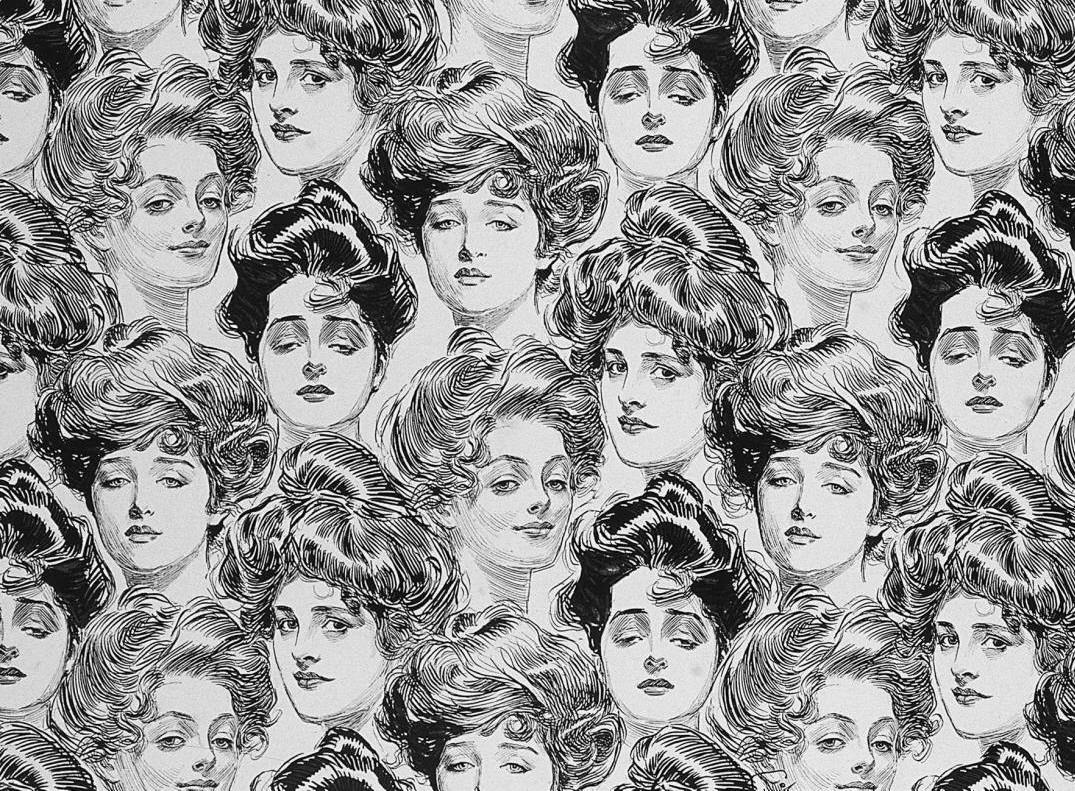
Charles Dana Gibson


http://www.spartacus.schoolnet.co.uk/USAdana.htm
Charles Dana Gibson was an illustrator. He became famous for his drawings of American high society. The young women in his drawings became known as Gibson Girls.  These are some photos showing the iconic 'Gibson girls'. 
I am going to use this as the influence for the hairstyle in my evening wear design.